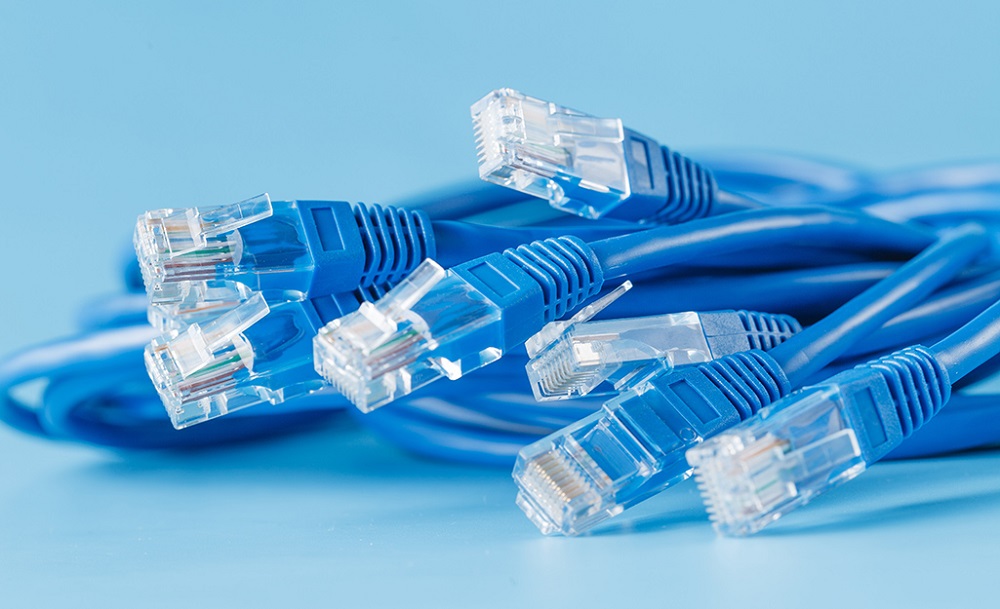
If you’re new to networking, choosing the correct ethernet cable for your network can seem like an impossible task. Cat5e Cable, Cat6 Cable, and Cat6a Cable are three different types of Ethernet cables. We’ll go over all of the different types of cables and their characteristics in this article. Let’s get started.
Rates of Data Transfer
The data transfer rate varies depending on the cable’s category. Cat5e Cable’s minimum and maximum data transfer rates are 100 Mbps and 1 Gbps, respectively. Cat5e Cable enables 100 Mbps data transmission rates up to 100 meters and 1 Gbps data transfer rates up to 50 meters.
Cat6 Cable has a minimum and maximum data transfer rate of 1 Gbps and 10 Gbps, respectively. It enables 1 Gbps data transmission speeds up to 100 meters (328 feet) in length and maximum data transfer rates of 10 Gbps up to 50 meters (164 feet).
Up to a length of 50 meters (164 feet), the Cat6a cable allows maximum data transfer rates of 10 Gbps.
Bandwidth
The bandwidth capabilities of a cable are determined by the category it belongs to, just like data transmission speeds. Cat5e Ethernet cables have a bandwidth capability of 350 MHz, 550 MHz for Cat6 Ethernet cables, and 750 MHz for Cat6a Ethernet cables.
Jackets
Another feature of ethernet cables to consider is its jacket. Three different jackets are available for Ethernet cables:
- Plenum
- Riser
- PVC
Plenum ethernet cables have jackets that are CMP-rated. For ethernet jackets, CMP is the highest rating. Cables with CMP-rated jackets are meant for installation in the high-risk plenum or horizontal spaces of the buildings. The atmospheric pressure here is higher as these gaps promote air flows for air conditioning and heating. As a result, the probability of a fire erupting and spreading is higher here. Plenum-rated cables not only stop a fire from spreading, but they also don’t produce any smoke or harmful substances. Plenum jackets are available for all types of ethernet cables.
CMR-rated jackets come standard on riser ethernet cables. CMR is the second-highest rating for the jackets of ethernet cables, as these cables are also fire and UV-resistant. These cables are intended for use in building riser areas or vertical spaces. Riser-rated jackets are available for all ethernet cable types.
PVC ethernet cables have jackets that are PVC-rated. These Ethernet cables are intended for use in outdoor environments. PVC jackets are available for all types of ethernet cables.
Conductors
The conductors are the third key thing to consider when purchasing ethernet cables. Pure copper conductors and copper-clad aluminum conductors are both available in Ethernet cables.
Conductors of Cat6 Pure Copper Cable have excellent EMI and crosstalk characteristics. It means that pure copper conductors offer excellent resistance to these two elements, preventing them from interfering with your transmission. The second advantage of pure copper conductors over CCA cables is that they have significantly less attenuation. The loss in signal power is referred to as attenuation. The third trait that distinguishes pure copper conductors is their lower DC resistance. As a result, fewer packets are retransmitted, and you can experience uninterrupted access.
Certifications
Ethernet cables come with two well-known certifications for safety: ETL and UL. The most demanding certification is UL, which has established strict safety criteria. This certification is more expensive for the same reason. ETL, on the other hand, does not have its own set of safety rules; instead, it adheres to those established by the UL. When compared to the UL, it is a less expensive certification.
These certifications may be found on all ethernet cables, including Cat6 cable, Cat5e cable, and Cat6a cable.
 Network Cables